Electrochemical and thermal storage, the future of energy management
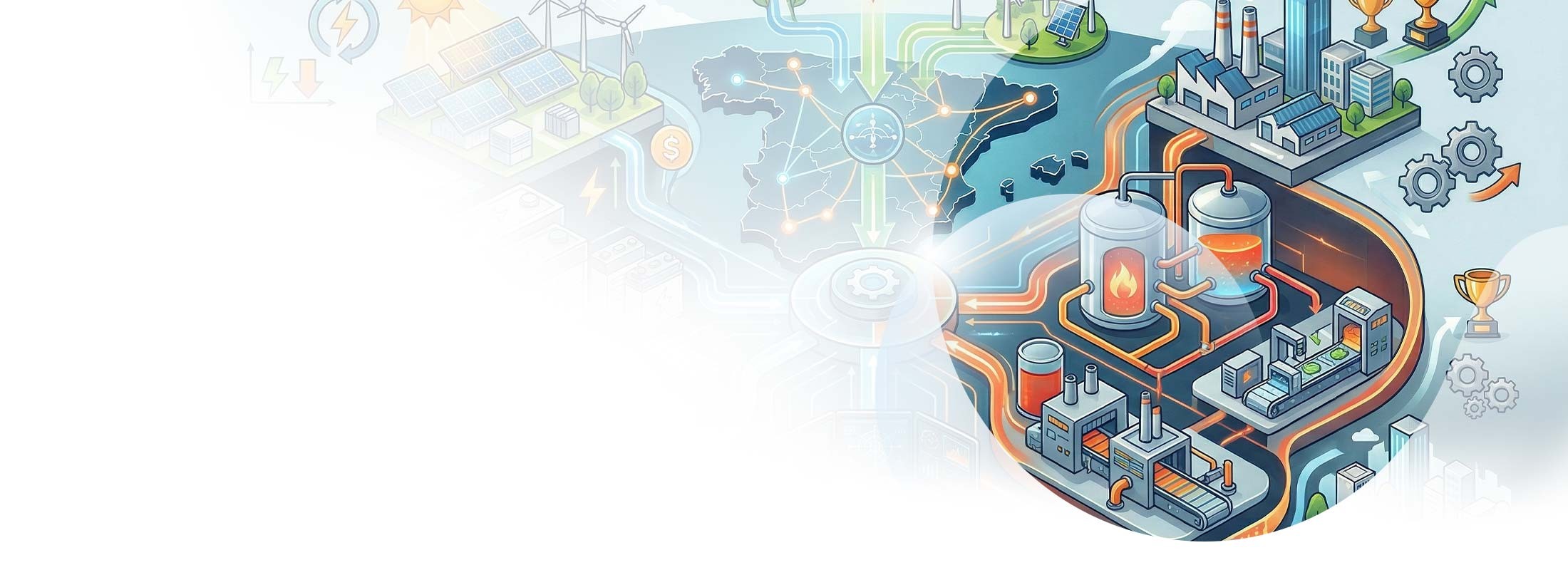
Electrochemical and thermal storage, the future of energy management
Electrochemical and thermal storage, the future of energy management
Spain is moving steadily towards an increasingly renewable electricity system, in which flexibility has evolved from a technical concept into an essential element for achieving efficiency and competitiveness. Today, it is no longer enough to simply generate and consume energy. Its lifecycle has become more complex, and its management plays an increasingly important role. To make this management possible, one element is becoming ever more essential: energy storage.
When generation relies heavily on non-dispatchable sources such as solar photovoltaic energy, the real challenge no longer lies solely in producing energy, but increasingly in deciding when to use it. This is where storage stops being a complement and becomes a strategic asset within any advanced energy model, especially in industrial and tertiary environments.
Within this context, two main types of storage stand out: electrochemical and thermal, each with its own specific applications and advantages.
Electrochemical storage, mainly based on batteries—particularly lithium-ion (LFP)—has seen significant development in recent years. The reduction in costs, close to 45% in stationary applications, has greatly improved its economic viability and accelerated its adoption. In addition, its near-instant response capability makes it a highly effective tool for optimizing photovoltaic self-consumption, shifting consumption to more efficient periods, reducing peak demand, and ensuring supply continuity in the event of micro-outages affecting critical loads.
Moreover, in a regulatory environment where participation in flexibility markets is now possible through the figure of the independent aggregator, and services such as SRAD already enable the monetization of demand management, batteries allow us to go a step further. They not only optimize consumption but also create new revenue opportunities. It is no coincidence that installed battery storage capacity in Spain has grown significantly, rising from around 60 MW at the end of 2025 to over 120 MW at the beginning of 2026.
Thermal storage, for its part, is set to play a key role in the decarbonization of industrial processes, particularly in sectors where heat demand is significant. Its main advantage lies in its ability to store thermal energy—sourced from renewables, waste heat, or electricity during low-cost periods—for later use when demand or prices require it. This approach makes it possible to decouple thermal production from consumption, improving overall system efficiency.
Technologies such as Power-to-Heat, which converts electricity into storable heat, or Power-to-Process, which reuses residual heat from industrial processes, are gaining prominence in this field. In addition, solutions such as storage in solid materials capable of reaching temperatures above 1,000°C, or in thermal fluids reaching up to 600°C, are emerging to meet different industrial needs.
Beyond their individual applications, the true potential of storage is realized when it is integrated into advanced energy management systems. Thanks to tools such as EMS or BMS, installations are no longer passive structures but become active energy assets that anticipate market conditions, optimize their operation, and actively participate in the electricity system.
At Edison Next, we support companies throughout this process, integrating electrochemical and thermal storage solutions into comprehensive energy strategies. We combine regulatory expertise, technology, and data analysis to turn flexibility into a real competitive advantage for our clients. Because in an increasingly dynamic environment, having the right energy at the right time not only improves operational efficiency but also opens the door to new opportunities for savings and value creation.